Cavendish Update 8/28/15 News/Sustainability/Events

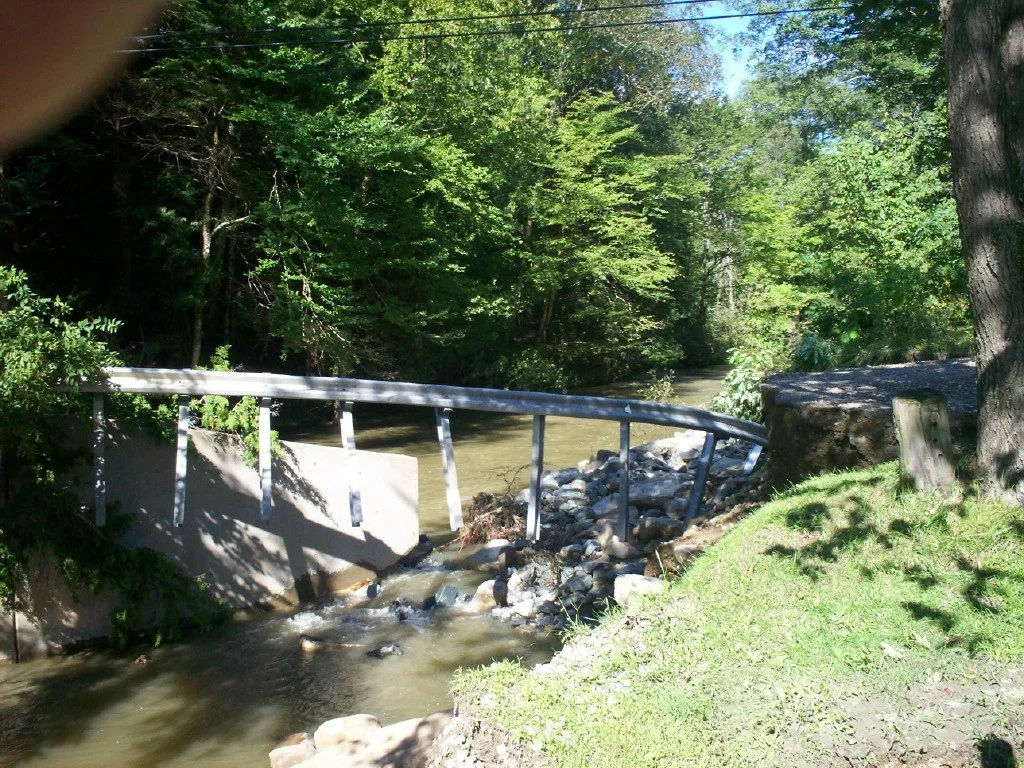
Aftermath of Tropical Storm Irene, which took place 4 years ago on Aug. 29, 2011. This bridge was finally replaced this past summer. 

Aftermath of Tropical Storm Irene, which took place 4 years ago on Aug. 29, 2011. This bridge was finally replaced this past summer. 

8/28/15 Cavendish Update Contains
1. Cavendish Related News
2. Cavendish Sustainability/Solar/Environmental News
3. Cavendish Memoirs: Chapter 25/Barn Renovation
4. Support for Jim Glidden PVFD
5. Fall Hours at the Cavendish Library
6. BRGNS Needs furniture and other items for rummage sale
7. Events
 
1. CAVENDISH RELATED NEWS 
Springfield Medical Care System Receives Funds: One of 11 community health centers in Vermont, Springfield’s Medical Care Systems (Ludlow Health Center is part of this system) receiving additional funding in recognition of their achievements providing high quality health care. Of the $493,860 awarded to the Vermont programs, Springfield will receive $42,438. Community health centers in Vermont will serve one-in-four Vermonters at more than 50 sites across the state and provides primary medical, dental and mental health services and access to low cost prescription drugs. Press Release
 
VT Statewide Assessment Results Released: Statewide results for the 2014-2015 Smarter Balanced Assessment have been released this week and Vermont students scored 37% proficiency in math and 58% proficiency in English and language arts. This new computer adaptive test, administered on-line, was developed by the Smarter Balanced Assessment Consortium and provides the first test results aligned with the Common Core State Standards. Parents may notice that fewer students scored as proficient on the Smarter Balanced test than did on the NECAP tests. This does not mean students know less, nor does it mean that Vermont schools—both public and independent-- are doing worse. It simply means the test is a more challenging one, and the Smarter Balanced Consortium deliberately set a proficiency threshold that it knew most students would not meet. "In order to understand what it means to actually score as 'not proficient,' we need several years of data... in five years if we find that kids who don't score as proficient aren't able to get jobs, then we're having a very different conversation." Press Release

Growers Report Bountiful Apple Season on the Way: The weather this summer has been perfect for the state's apple crop. The dry, warm spring was perfect for the bees to pollinate the apple blossoms, and once the apples were set, the rains came in June.  So those fruit just absorbed the water and really exploded in terms of size. And now the weather is drying off again, and will be cooling off, allowing the fruit to ripen. WCAX

2. CAVENDISH SUSTAINABILITY/SOLAR/ENVIRONMENTAL NEWS
• Solar Question Posted to the Cavendish VT Facebook PageI hate to be a naysayer, but I just don't understand the fiscal feasibility of going solar. The man just left here after doing a site assessment. We have 90% efficiency with a ground-mount system at an estimated cost of $25,000. If we qualify for the tax credit AND if the system produced enough power to cover all of our electricity costs, it still would take 15+ years to see any return on our money. I'd be much better off putting that money into my SEP-IRA.
 
P.S. A wind power initiative would be more useful in this wind tunnel that we inhabit.
 
 Answer from the Cavendish Energy Committee: In general, from year to year, utility bills increase by a certain percentage, and as long as you use electricity you will receive a monthly bill from GMP or Ludlow Electric.  By using leverage – borrowing from a bank to pay for the system – you should be able to save money from the very first year.  First, you have to compare your monthly bank payment to the monthly electric cost that you are saving.  By going solar, your monthly bank payment would hopefully be less thanwhat you are currently paying your local utility. That’s money in your pocket each month starting in the very first year. As the utility increases their rates, your payment to the bank stays constant, thereby saving you even more money each month.  Further, you have the added bonus that, once the loan is paid off you wont have any bill. 
 
Here’s another way to look at it.  If you have $25,000 in a savings account or plan now, determine how much it earns each year.  Is that more or less than the amount of electricity you will save each year with solar panels?  Where would you rather have your money – in the savings plan, or generating electricity?  Payback period is too limited a way to look at the cost if you are saving money and the planet each month.
 
It’s important to consider the loan itself. If you want to pay it off as quickly as possible, say infive or ten years, you could spend more each month than the actual cost of your utility bill. However, since this is a “monthly,” by taking out a longer term loan, say 15-20 years, you can basically “freeze” your monthly utility bill at its current rate
 
In addition to the financial incentive, there is also the positive impact on the environment by reducing the need of your local utility depending coal or other fossil fuels to generate power.  There are several studies that show a positive impact as well on the value of your home.  If you ever were to sell or mortgage the house it would be worth more with solar panels attached. 
 
Similar to solar, electric generation from wind power is an intermittent resource and its generation fluctuates in response to weather conditions.  The amount of energy produced by a specific wind tower can depend greatly on location, tower height, and proximity to obstructions.  Nevertheless, most properly sited modern wind turbines are able to generate electricity 95% of the time.  There are multiple levels of potential wind energy generation ranging from class 1 (lowest) to class 7 (highest).  According to the Wind Resource Map of Windsor County found at the Vermont Energy Atlas, Cavendish is in the very low end of the range, mostly class 1.  Although there are several potential wind sites in town, they are mostly suitable for small scale, residential generation.
 
• Solarize Makes Sense: Now at Tier 2, with 6 solar installs and 35kw of new electricity created, there is still time to have a site visit. If you have had your site visit and have yet to commit, we encourage you to do so early. The program ends on September 30th, and, historically, the last two weeks of the program see many people sign up. The earlier you sign up, the earlier your install will happen! FMI
 
 Going Solar Video: Watch a Video of CTES 4th Grade Teacher Jenn Harper who recently went solar. 
 
• Seven Tips to Protect Vermont Wildlife
 
• EPA & USPS Green Infrastructure Techniques for Storm water Management/Rain Gardens Training: CCCA is encouraging community members to attend the September 17-18 workshop in Hinsdale, NH. The EPA and the U.S.  Postal Service are offering a practical, hands-on training on the Federal/State Storm water regulation requirements and innovative options for storm water management including rain gardens.  At this training, you will learn the fundamentals of green infrastructure and how to site, design, install and maintain rain gardens to reduce storm water contamination and run-off.   Register on-line by Sept. 14.        
 
3. CAVENDISH MEMOIRS: CHAPTER 25/BARN RENOVATION
Through out Philip Tiemann’s Memoirs he talks a great deal about working in the barn. This week, in addition to chapter 25  we are thrilled to include a collection of photographs by Mary Anne Butler of the renovations that took place earlier this summer on Tiemann’s Windy Hill barn.
 
For the prelude and links to all of the chapters go to Coming to Vermont (Cavendish): Memoirs of Philip Tiemann
 
4. SUPPORT FOR JIM GLIDDEN PVFD
Jim Glidden served Proctorsville Fire Dept. for 42 years rising to the rank of deputy chief. Jim is currently fighting for his life as he battles lung cancer, which has been found in his lungs, lymph nodes, and brain. He has just finished his first round of Chemotherapy for 3 consecutive days and will shortly begin 14 straight days of radiation on his brain. After the 14 days he will again do chemotherapy for the next six months. Jim and his wife Raylene are continuously making trips to Dartmouth Hitchcock Medical Center in NH. PFD will be holding a benefit dinner for Jim. In the mean time if you would like to help Jim and his family please send a check or gas gift card to the Proctorsville Volunteer Fire Dept in care of Jim Glidden at P.O. Box 81 Proctorsville, VT 05153 Thank you in advance for your support and don't forget to check back for the date of the benefit spaghetti dinner.
 
5. FALL HOURS AT THE CAVENDISH LIBRARY
The Cavendish Fletcher Community Library will return to fall hours as of August 31, 2015. Hours will be: Monday 10:00-6:30; Tuesday, Wednesday, Thursday 9:00-6:30; Friday 9:00-4:00; andSaturday 12:00-4:00. Story time will move to Wednesdays at 9:45 to prevent conflicts with library classes,
 
6. BRGNS NEEDS FURNITURE, HOUSEWARES FOR RUMMAGE SALE
Black River Good Neighbor Services will hold its Annual Fall Rummage Sale at Fletcher Farm, 611 Route 103 South in Ludlow on Friday and Saturday, September 18th and 19th, from 10 a.m. to 4 p.m. and Sunday September 20th, from 10 a.m. until 2 p.m. The organization is now accepting donations of clothing, housewares, linens and furniture.

If you have anything to donate, please bring it to the thrift store at 37B Main Street in Ludlow or for larger items such as furniture please call 802-228-3663 to arrange a drop off time. If you are unable to drop off a furniture donation, our volunteers may be able pick it up if arrangements are made in advance.
 
Proceeds from this sale benefit BRGNS’ food and financial assistance programs. “This is really a community effort. Folks donate their unwanted items to us, and we put our earnings right back into the community,” said Audrey Bridge, Executive Director of BRGNS. “Although the economy has improved, demand for our services continues. There are still people going hungry and needing help with housing and clothing costs; so we keep running the rummage sales,” said Bridge. The monies raised will help cover the cost of utilities, heating fuel, food and rent for qualified individuals and families in Ludlow, Mt. Holly, Belmont, Proctorsville, Cavendish and Plymouth.
 
So, please mark your calendar and come explore the many unique bargains.
 
For further details please contact Audrey Bridge at the Black River Good Neighbor Services Thrift Store, 37B Main Street, 802-228-3663, or BRGNS@tds.net.
 
7. EVENTS
Upcoming Events This week
August 29 (Saturday): 4th anniversary of Tropical Storm Irene
 
For more information on these and other events, go to the Cavendish Connects September Calendar. For regional events, check out the Okemo Valley Chamber of Commerce Calendar.

Seven Tips to Protect VT's Wildlife


TOM ROGERS, Special to the Free Press12:05 a.m. EDT August 23, 2015

(Photo: Copyright Susan C. Morse)

Vermonters have lived close to the land since Colonial times. As the most rural state in the nation, with more than 60 percent of our population living in rural areas, Vermont has created a collective identity that features back roads, maple trees, forests, farms and fields.

As if that were not enough, we also care deeply about wildlife and cannot envision our lives without its regular presence, a constant and gentle refrain that wildness in all its forms deserves our attention.

But most Vermonters don’t realize that unlike many western states, with their vast national forests, wildlife refuges, and other publicly owned properties, Vermont’s land is mostly under private ownership. Eight-one percent of the Green Mountain State is owned by individuals and businesses.

When conservationists work to conserve species as diverse as lynx or spiny softshell turtles, they must take state and federal borders into account — political boundaries that the animals themselves typically ignore.

So what should a conservationist do when wildlife leaves a park or refuge and starts affecting nearby farms? Perhaps most challenging of all, how does one create a strategic plan to conserve species in Vermont within an acre-by-acre patchwork of land controlled by tens of thousands of landowners?

Where the wild things are

John Austin, manager of Vermont Fish & Wildlife’s lands and habitat program, has devoted his life to ensuring Vermont’s forests and fields remain places where wild things can thrive. A large part of his career has involved working with private landowners, sharing advice on how they can best manage their land to promote wildlife.

Austin recently helped write and edit a 132-page book for landowners entitled A Landowner’s Guide – Wildlife Habitat Management for Lands in Vermont. Nearly 10 years in the making, the guide combines the knowledge and experience of wildlife and fisheries biologists, foresters and land managers.

John Austin posts signs in Dummerston in December as part of his work conserving wild spaces. (Photo: Courtesy of Tom Rogers, Vermont Fish and Wildlife)

When asked to summarize some of the simplest suggestions from the book, Austin gave seven easy recommendations that provide landowners with ideas for promoting wildlife on their property.

“Every landowner can take a few simple actions to help improve the habitat on his or her land,” Austin said. “Many of the suggestions we give landowners aren’t difficult, and in fact many involve just standing back and letting things take their natural course. Not doing something is sometimes more important than doing too much.”

Tip 1: Leave dead trees standing

When asked by a landowner what they can do to promote wildlife on their property, Austin’s first answer is always the same. “Leave dead trees standing.”

“People often cut down standing dead trees because they think they’re ugly or to make room for more live trees,” said Austin. “In fact, for many birds and mammals, these trees provide some of the best habitat in the forest.”

Dead trees, often referred to as “snags,” provide nesting sites for cavity-nesting birds such as owls, and create perches and feeding sites for insect-eating birds like woodpeckers and nuthatches. Many of Vermont’s endangered bat species use snags with sloughing loose bark as daytime roosts and maternity colonies. And wood ducks, mergansers and other waterfowl use dead tree cavities found near wetlands as nest sites.

Tip 2: Don’t sterilize streams

Streams running through city parks are models of cleanliness. Wide, green lawns slope down to a tidy bank of stones and cement, with water running unimpeded down a wide, shallow channel. Without boulders, downed logs or aquatic plants blocking the view, these spaces are also barren of fish, salamanders, or invertebrates –and regularly exhibit no signs of wildlife at all. Landowners should bear this warning in mind.

“Good aquatic habitat is often messy and complex. It’s full of downed trees, sticks, leaves, plants — items for fish to hide under and insects to cling to,” Austin said.

Austin recommends that landowners leave natural woody debris such as sticks and logs in stream channels, which can help create pools and provide cover and shade for fish and other critters. Landowners should also keep livestock and vehicles from getting too close to the stream to avoid allowing the stream bank to become trampled and eroded.

Austin’s rule of thumb for maintaining healthy streams is simple. “Don’t put material into streams and don’t take material out.”

Tip 3: The wetter, the better

It’s estimated that North America used to house 200 million beavers, meaning that there were 10 times as many of these wetland architects as today. Wetlands, where ducks and geese thrive and where amphibians mate, are some of the most productive wildlife habitat on Vermont’s landscape. Forested wetlands are the first places where green shoots sprout up each spring, supplying an important food source for hungry bears.

Wetlands and vernal pools also provide breeding habitat for amphibians, and are sources of water for a variety of wildlife. Austin recommends that landowners avoid draining these small, ephemeral pools and maintain forest cover around them to keep them shaded and cool.

Wetlands benefit wildlife, but they can also greatly benefit people too, acting as filters and sponges to soak up excess water during major flooding events. During the flooding that resulted from Tropical Storm Irene, Otter Creek jumped its banks in Rutland causing widespread destruction, but 30 miles downstream the creek did not swell nearly as much in downtown Middlebury. A series of wetlands between the two towns may have saved Middlebury from the devastation felt by many Vermont towns during the storm.

Intact forests along the water's edge help give wildlife a place to thrive at Green River Reservoir in Hyde Park. This photo was taken in September 2013. (Photo: Courtesy of Tom Rogers Vermont Fish and Wildlife)

According to Austin, wetlands not only benefit wildlife, but they are also major sources of carbon sequestration in the fight against climate change. “Maintaining wetlands is one of the best things we can do in the face of climate change, both for the carbon they capture and store, and for the water they soak up during major rain events,” he said.

Tip 4: Promote wild buffets

Many species of wildlife benefit from berries and nuts. Landowners who hunt will often be the first to recognize the importance of promoting trees and plants that provide food for wildlife.

“It’s easy to see when bears have been climbing up a large old beech or oak tree — one can readily spot the bear’s distinct claw marks,” says Sue Morse, who founded the wildlife nonprofit Keeping Track and serves as the science director. “Bears climb high up into the tree’s crown and bend and break in the branches in order to gorge on beech nuts, acorns or other fruits.”

Bears are not the only animals that enjoy a meal of nuts or berries. Deer, turkeys, grouse, squirrels, and songbirds all take advantage of this opportunity for an easy meal.

“Vermont’s old fields and mountain hollows are absolutely filled with ancient apple trees — a remnant of the days when our forested state was largely covered in farm fields,” said Morse.

These ancient trees are typically overgrown with dead wood and knotted branches, and are darkened and crowded by nearby trees. A small amount of time spent thinning the branches and opening up the surrounding forest can act as a virtual fountain of youth for these trees.

“Any tree that produces fruits, nuts, or berries helps feed the animals on your land,” said Morse.

Tip 5: Wildlife require connected lands

Among land conservationists there’s a saying that goes, “They’re putting up more roads and buildings all the time, but you don’t see them tearing many down.”

This observation may be true in Vermont, where development is increasing much faster than the state’s population is growing. Buildings and businesses are regularly built on land that was once forest or pasture. These developments remove habitat from wildlife. Perhaps more insidious are houses with big lawns and long driveways, which fragment Vermont’s habitat by pushing development further into forests and higher up on mountainsides.

The forest fragmentation that results when people carve small residence blocks out of the forest in rural areas has been termed “sub-ruralization,” a play on suburbanization. It’s a trend happening throughout Vermont, particularly in areas places where second homes are most desirable. Even backcountry activities, such as hiking, mountain biking or skiing, are increasingly encroaching on wild animals’ turf.

Susan Morse takes visitors around her property, known as “Wolfrun” in Jericho, to learn how to look for signs of wildlife, such as this beaver lodge. (Photo: Copyright Susan C. Morse)

Morse recommends that people search their property for places that animals frequent, where there are signs such as tracks and scat, and leave those places undisturbed and undeveloped for wildlife.

“Look for the hotspots where there are foraging opportunities or places that just feel a little more wild such as ridgelines, wetlands, or streams,” says Morse. “You wouldn’t want to wake up and have 10 strange people in your bedroom.”

Tip 6: Don’t clean up the forest

Many species, from snakes and salamanders to weasels and the rabbits they snack on, need spaces to crawl, slither and hide. Brush piles, downed trees and rock piles create structural diversity and are teaming with animals furred, feathered, or scaled.

“It’s difficult to turn over a rotten log during the early summer in the forest,” says Morse, “and not find some species of salamander.”

Morse, who works with landowners to help improve the wildlife habitat on their property, says some landowners she meets are interested in improving hunting opportunities, while others just like to give wildlife a place to thrive. Many need to learn the importance of leaving brush and snags where they stand. She recommends people leave brush piles for small mammals and nesting birds.

“One gentleman was excited to show me how nice and neat everything was in his woods,” says Morse. “He had cleaned out all of the undergrowth and downed trees from the forest floor. He thought he was improving the forest, but from my perspective I saw a forest totally devoid of any suitable habitat for wildlife.”

Tip 7: Leave some space by the water’s edge

The water’s edge is one of the most important places for wildlife, from fish and frogs to otters and bobcats. John Austin and other biologists recommend landowners leave at least 100 feet of forested habitat along bodies of water. “The bigger the buffer, the better,” says Austin, “but 100 feet is the bare minimum.”

Susan Morse points marks in May 2014 left by a moose who chewed park off a maple tree at her property in Jericho. (Photo: Courtesy of Tom Rogers, Vermont Fish and Wildlife)

Also of importance, but often overlooked by landowners who want a water view, is the stream-side vegetation. On streams, rivers, lakes and ponds, a vegetated shoreline can provide cover for fish to hide under and helps to keep water cool during the hot summer months. It provides nesting habitat for birds that prefer to nest in stream corridors and gives cover to deer, bear and other species in their search for a quiet place to drink.

A forested strip along the water not only provides a home for wildlife but can also dramatically improve water quality. Trees, bushes and the leaf litter duff on the forest floor provide a natural filter for rain and snowmelt as it runs into the water body.

The importance of these forested buffers for water quality was recently recognized with the passage of the state’s Shorelands Protections Act, enacted in July 2014, which limits development along Vermont’s lakes to improve wildlife habitat and filter runoff.

Private landowner as wildlife’s best friend

With the vast majority of Vermont’s land in private ownership, the conservation efforts needed to protect and conserve wildlife will require a collaborative approach. Landowners can have the greatest impact most often by doing the least; that is resisting the urge to rework the land into “civilized” space. Many of Austin and Morse’s tips for maintaining habitat for wildlife may seem counter-intuitive, but when practiced wisely, they can promote healthier, more abundant wildlife on private property.

Given that most Vermonters live in the state because of its wild and scenic beauty, living more lightly on the land is an attractive and prudent approach. For landowners seeking more advice from wildlife biologists or county foresters on how to begin, Austin recommends looking online for resources or thumbing through a copy of the guidelines he and his colleagues have created. Then, he says, landowners can “observe the wildlife species on their own property and thrive in harmony with the land around them.”

This story first published Aug. 23, 2015. Biologist Tom Rogers does outreach for the Vermont Fish & Wildlife Department. Reach him at tom.rogers@vermont.gov.

Get the book:

“A Landowner’s Guide – Wildlife Habitat Management for Lands in Vermont,” by John Austin

The book is for sale at www.VtFishandwildlife.com under “About Us.”

Cavendish Update 8/21/15 News/Q & A/Coach Needed

With school starting this coming Wednesday, feels like the last summer weekend. 

With school starting this coming Wednesday, feels like the last summer weekend. 

8/21/15 Cavendish Update Contains
1. Cavendish Related News
2. Thank you Sharon Huntley and CCCA
3. Soccer Coach/Players Needed
4. Cavendish Q & A: Recycling Plastic Pillows
5. Tiemann Cavendish Memoirs: Chapter 24/Fletcher Farm
6. Cavendish Community Fund Accepting Applications for Fall 2015 Grants
7. Events
 
1. CAVENDISH RELATED NEWS
Researching Your Cavendish Ancestors? There is now a digital guide to help you locate where people are buried in the various Cavendish cemeteries. This is a work in progress. Cavendish Cemeteries
 
2. THANK YOU SHARON HUNTLEY AND CCCA
One again it was an incredibly successful Proctorsville concert series thanks to Sharon Huntley and the overall sponsorship of the Cavendish Community and Conservation Association. Thanks to sponsors, musician and all those who made this a special session. Looking forward to next year.
 
3. SOCCER COACH/PLAYERS NEEDED
A volunteer coach for grades 3-4 boys soccer is needed for this fall. Games are mainly on Tues- Thu, some Saturdays. Please contact Terry at dthuskies@hotmail.com. Also, is your 3-6th grade daughter(s) interested in soccer? Players needed.
 
4. CAVENDISH Q & A-RECYCLING PLASTIC PILLOWS
Q. Regarding Cavendish Zero Sort recycling... I think they take plastics #1-#7, but is this only rigid plastics or do they also accept those inflated plastic shipping pillows (this particular batch is marked #2)?
 
A. According to Bruce McEnaney, Asst Town Manager, They can't be recycled using the present machinery operated by Casella. The problem with the pillows and also plastic shopping bags is that they blow around and get caught in the gears and bearings on the machine.  They then have to stop sorting and cut the offending plastic awayHowever, you can include deflated packing pillows in your grocery store’s plastic bag recycling bins. These bins are usually located at the entrance of the store.
 
5. CAVENDISH MEMOIRS: CHAPTER 24/FLETCHER FARM
Now up to Chapter 24 the Tiemanns take advantage of the newly formed theater at Fletcher Fam. This week’s “bonus” feature is about Fletcher Farm and one of the performers-Walter Hard.
 
For the prelude and links to all of the chapters go to Coming to Vermont (Cavendish): Memoirs of Philip Tiemann
 
6. CAVENDISH COMMUNITY FUND ACCEPTING APPLICATIONS
The Cavendish Community Fund has announced that it is now accepting grant applications for fall 2015 awards. The deadline for applying is October 1, 2015. Applications are available at www.CavendishCCCA.org under “Community Fund” and include instructions on how and where to apply.
 
Projects, programs or events must directly benefit the Cavendish community in some way. A panel of local citizens reviews all applications and recommends grant awards based on the quality and feasibility of each proposal. Grants are not expected to exceed $1,000 each and will depend primarily on the number of applications received and the amounts requested.
 
The fund began in 2007 and so far has distributed in total over $25,000 to various organizations and individuals for educational, artistic and cultural projects, programs and events of benefit to the Cavendish community. Since inception it has distributed some 38 awards.
 
For further information on applying, on eligibility or on any other aspect of the grant program, or for help completing the application, please call Peter LaBelle at 226-7250 or Barbara Dickey at 226-7187.
 
7. EVENTS
Upcoming Events This week
August 22 (Saturday): Arts & Crafts Festival at Fletcher Farm 10-4
August 26 (Wednesday):  First Day of School. Please Drive Carefully!
 
For more information on these and other events, go to the Cavendish Connects August Calendar. For regional events, check out the Okemo Valley Chamber of Commerce Calendar.


Cavendish Update 8/14/15 News/Hazardous Waste

8/14/15 Cavendish Update Contains
1. Cavendish Related News
2. Tiemann Cavendish Memoirs: Chapter 23/Dust Bowl
3. Household Hazardous Waste Collection
4. Events
 
1. CAVENDISH RELATED NEWS
Church Communities Unite for St. James PastorMembers of two United Methodist churches in Windsor County-St. James in Proctorsville and Rachel S Harlow Church in Windsor are raising money for their pastor Earl Dionne, who is fighting an aggressive form of head and neck cancer. Valley News
 
CHS Sribbler II-Summer Edition: The Cavendish Historical Society’s Newsletter for Summer 2015 is now available on-line at the CHS blog. 
 
Nearly 6% Increase for BC/BS Customers: The Green Mountain Care Board has given its approval to a nearly 6 percent rate increase for individual customers of Blue Cross and Blue Shield. Blue Cross originally filed for an 8.6 percent increase but the board whittled this proposal down to a 5.9 percent increase. The increase is the weighted average of all of Blue Cross policies that are sold on Vermont Health Connect, so individual consumers could see higher or lower rates for their own policies. VPR
 
2. TIEMANN CAVENDISH MEMOIRS: CHAPTER 23/DUST BOWL
In Chapter 23, the winter of 1936 brings something unusual to the Tiemann’s Windy Hill-brown snow. Possible the largest man made ecological disaster, the Great Plains were being destroyed via the “Dust Bowl,” and with two mile high wind storms, the effects could even be seen in Cavendish. For the prelude and links to all of the chapters go to Coming to Vermont (Cavendish): Memoirs of Philip Tiemann.
 
3. HOUSHOLD HAZARDOUS WASTE COLLECTION
The Southern Windsor/Windham Counties Solid Waste Management District is sponsoring free events for the collection and safe disposal of household hazardous wastes on Saturday, September 12.  Residents and businesses from Andover, Baltimore, Cavendish, Chester, Grafton, Ludlow, Plymouth, Reading, Rockingham, Springfield, Weathersfield, West Windsor, and Windsor, Vermont may participate.  No pre-registration for residents. Businesses must pre-register and will be charged for disposal costs.  The collections will be held at the Springfield Transfer Station from 9:00 a.m. until 1:00 p.m. and at Bellows Falls Union High School 9:00 a.m. until 1:00 p.m.  Bring in a mercury fever thermometer and receive a new digital fever thermometer. For more information, call 674-9235 or click on www.vtsolidwastedistrict.org for a list of what to bring.
 
4. EVENTS
Upcoming Events This week
August 14 (Friday): Last night of the Perseid Meteor Shower. Get outside and enjoy the shooting stars. A new moon tonight should produce perfect conditions for watching.
August 19 (Wednesday):  The last Wednesday Night Proctorsville Concert featuring Three to the Bar. Note that this event begins at 5:30 pm.
 
For more information on these and other events, go to the Cavendish Connects August Calendar. For regional events, check out the Okemo Valley Chamber of Commerce Calendar.